Desert Days: Camping on the Edge at Goosenecks
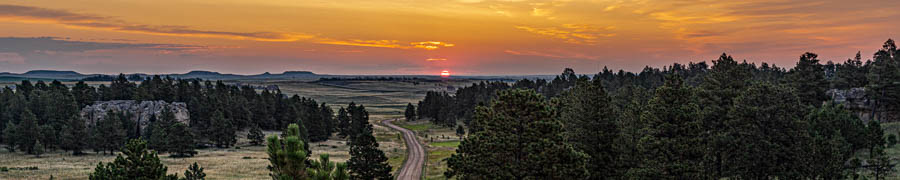
We drove about 150 miles south to Goosenecks State Park, just outside of Mexican Hat, Utah. I had seen numerous photos of the park’s dramatic San Juan River canyon, but the real view was even more impressive. Reviews had promised great things—and they were right. What surprised me, though, was how exposed the designated campsites were along the cliff edge. We found our spot mid-morning, after early risers had left and before the late-afternoon arrivals. By evening, rigs were lined up about every 50 yards, some sites having three rigs clustered together. It wasn’t exactly the solitude we love when dry camping, but most people were respectful, quiet at night, and careful to switch off outside lights after sundown. Well, except for the one guy who parked right in front of my Milky Way shot.

Goosenecks worked well as a base for day trips. Just nine miles away, the Valley of the Gods offers a Monument Valley-style landscape without the crowds or gift shop—a 17-mile gravel loop winds among towering sandstone buttes, with plenty of wide-open views. We saw a few vans and small trailers camped off the road—I’d have enjoyed staying here, but I would not want to subject the ORV to the terrible road.

Beyond the valley, the Moki Dugway climbs the face of Cedar Mesa. Built in the 1950s to haul uranium ore, this three-mile gravel road gains about 1,000 feet at a steady 10% grade. Narrow switchbacks cling to the cliffside, with no guard rails, and two trucks would struggle to pass in places. We drove up early to avoid traffic and reached the top without meeting another vehicle, rewarded with sweeping views over the red rock country below.

Natural Bridges National Monument lies farther along the mesa, home to Sipapu, Kachina, and Owachomo—three of the largest natural stone bridges in the world. Unlike arches, which form by weathering, bridges are carved by flowing water. The scenic rim drive offers overlooks, while trails descend into the canyon for those wanting to stand beneath the spans. Some routes involve ladders bolted into cliff faces—too sketchy for us—so we opted for the easier trail to Owachomo Bridge.


Just outside Bluff, the Sand Island Petroglyphs stretch nearly 100 yards along a sandstone wall. At first glance, the carvings seem scattered, but the longer you look, the more details emerge—humans with elaborate headdresses, spirals, animals, hunting scenes, even riders on horseback. The artwork spans millennia: from the Archaic period (around 4500–2000 BCE) to the Ancestral Puebloans (500–1300 CE), and later Ute and Navajo creations (1700s–1800s CE). Weathered or sharp, the petroglyphs feel like pages from a stone-bound cultural journal. Standing there, tracing the stories etched across the wall, it was humbling to imagine the generations of people who had left their mark on this landscape.


Dennis
Notes:
- We also visited Edge of the Cedars State Park in Blanding, where an Ancestral Puebloan village includes a restored kiva and walkable ruins. Inside, the museum holds one of the largest Puebloan pottery collections in the Four Corners. Thousands of painted bowls, rare effigy pots, and finely crafted utility ware that showcase remarkable artistry and offer a glimpse into daily life centuries ago. The centerpiece of the museum is a uniquely preserved macaw feather sash, crafted around AD 1150 by Ancestral Puebloan (also known as Anasazi) people. It’s made of over 2,000 tiny scarlet macaw feathers, together with yucca fiber, leather, and squirrel pelt. The result is a striking and rare artifact—perhaps among the most intricate and personal remaining objects from that era.
- If it is dinnertime when you leave the museum, try the Homestead Steakhouse. The food is good and not too expensive. We were told it’s the nicest place in town.


- Cow Canyon Coffee on the edge of Bluff, Utah, is a charming place for a cup of coffee and a blueberry muffin. This is an actual coffee shop. They also serve lunch. The Princess and I stopped there several times. Next door is the Cow Canyon Trading Post. The pottery and textiles are beautiful.

There was this one guy at Goosenecks who seemed to be afraid of the dark, or maybe didn’t get that we were in a wonderful dark sky area, and it is bad form to keep your lights on all night.


Imagining all these spots is what I look forward to when you post. Thank you for sharing your experiences!
Great pictures. Interesting read.